

Violating an order of protection in New York is a crime that triggers immediate police response and criminal charges. The legal system treats these violations as serious offenses, often resulting in arrest and prosecution regardless of the victim's wishes. This guide explains the specific criminal contempt charges, mandatory arrest procedures, firearms restrictions, and custody impacts you face. We break down the legal framework to help you understand the severity of these actions.
Criminal Contempt Charges
When a person violates an order of protection, the state charges them with criminal contempt. Criminal contempt is the intentional disobedience of a valid court order. In New York, this is not a minor infraction but a distinct criminal offense under the Penal Law. The severity of the charge depends on the nature of the violation and the defendant's history.
Classification of Contempt
New York law categorizes criminal contempt into different degrees. Criminal contempt in the second degree is a Class A misdemeanor. It involves intentionally disobeying a court order. The maximum penalty is one year in jail. Criminal contempt in the first degree is a Class E felony. This applies when the violation involves following, telephoning, or appearing within sight of the protected person, or when the defendant has a prior contempt conviction. The maximum penalty is four years in prison.
Aggravated Contempt
Aggravated criminal contempt is a Class D felony. It occurs when the violation causes physical injury or places the protected person in reasonable fear of physical injury. The maximum penalty is seven years in prison. These charges carry significant weight in the Rockland County court system. Prosecutors often seek harsh sentences for aggravated violations to protect the public and the victim.
Mandatory Arrest Procedures
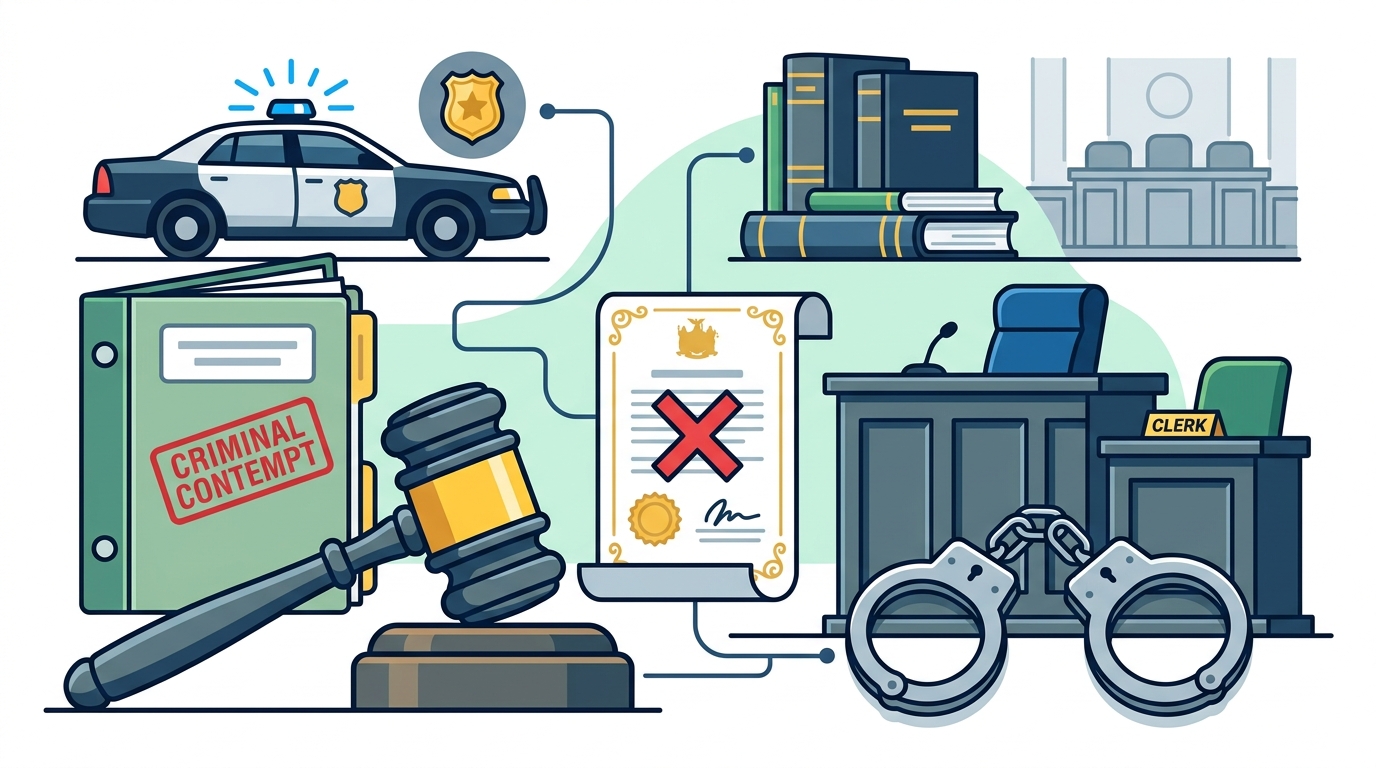
New York enforces strict protocols for domestic violence and order violations. Mandatory arrest is a legal requirement for police officers when they have reasonable cause to believe a crime has occurred. If a victim reports a violation, officers must arrest the respondent. They cannot simply take a statement and release the suspect. This policy ensures accountability and immediate safety for the protected party.
The Arrest Process
Upon arrest, the defendant is processed at the local police station. Officers collect fingerprints and photographs. The defendant is then held until their first court appearance. In Rockland County, this often occurs at the Clarkstown, Ramapo, or Orangetown Justice Courts. The court sets bail and issues a new or modified order of protection. The defendant must appear at this arraignment to answer the charges.
Victim's Role
Many defendants believe the victim can drop the charges. This is a dangerous misconception. Once the police make an arrest, the case belongs to the District Attorney's Office. The victim cannot unilaterally dismiss the criminal case. The prosecutor decides whether to proceed based on the evidence. This independence of the state from the victim ensures that the legal system upholds the court order regardless of personal relationships. according to Resources Services NYPD
Firearms Restrictions
Violating an order of protection has immediate consequences for firearm ownership. Firearms restrictions are legal prohibitions that prevent individuals from possessing or purchasing guns. In New York, a person subject to a valid order of protection is generally prohibited from possessing firearms. This restriction is automatic upon the issuance of the order. It does not require a separate hearing to take effect.
Legal Prohibitions
New York Penal Law Article 265 governs weapons offenses. Possessing a firearm while subject to an order of protection is a felony. The law defines this as criminal possession of a weapon. If police discover a gun in the home of a respondent, they must seize it. The defendant may face additional charges for illegal possession. This creates a compounding legal risk that extends beyond the initial contempt charge.
Long-Term Consequences
A conviction for violating an order of protection can permanently bar an individual from owning firearms. This restriction follows the person for life. It affects their ability to hunt, work in security, or protect their property. The legal system views firearm possession by a person with a history of domestic violence as a severe public safety threat. Therefore, these restrictions are strictly enforced and rarely lifted.
Custody Impact
Family law and criminal law intersect significantly in these cases. Custody impact refers to how criminal charges affect a parent's rights to their children. A violation of an order of protection is a major factor in custody determinations. Courts prioritize the safety and well-being of the child. A parent who violates a court order demonstrates a lack of respect for legal boundaries. This behavior negatively influences the judge's decision on custody and visitation.
Best Interests Standard
New York courts apply the best interests of the child standard. They consider the parent's history of domestic violence or legal violations. A recent arrest for contempt is a significant negative factor. The court may limit visitation to supervised settings. It may also grant sole custody to the other parent. The goal is to ensure the child is not exposed to conflict or danger. The criminal record becomes part of the permanent file in the family court case.
Modification of Orders
Existing custody orders can be modified due to new criminal charges. The non-offending parent can file a motion to change custody. They argue that the violation creates an unsafe environment. The court reviews the evidence of the violation. If the judge finds the violation credible, they may alter the parenting plan. This change can be permanent or temporary. It often results in a significant loss of parental rights for the violating parent.
Key Takeaways
- Violating an order of protection is a crime, not a civil matter.
- Criminal contempt in the second degree is a Class A misdemeanor.
- Criminal contempt in the first degree is a Class E felony.
- Aggravated criminal contempt is a Class D felony involving physical injury.
- Police are required to make an arrest when they have reasonable cause.
- The victim cannot drop the criminal charges once the state takes over.
- Firearm possession is prohibited for individuals subject to these orders.
- Custody decisions heavily weigh the parent's compliance with court orders.
Frequently Asked Questions
Can I be arrested if the victim did not call the police?
Yes. If police are present for any reason and observe a violation, they must arrest the respondent. Additionally, if the victim reports the violation later, the police can execute an arrest warrant. The presence of the victim is not required for the arrest to be valid.
What is the difference between a temporary and final order?
A temporary order is issued immediately after an arrest or hearing. It lasts until a final hearing. A final order is issued after a full trial or settlement. Violating either type of order is a crime. The penalties are similar, but the duration of the order differs.
Will I go to jail for a first violation?
It is possible. For a Class A misdemeanor, jail is a potential penalty. However, first-time offenders may receive probation or a conditional discharge. The judge considers the circumstances, such as whether there was physical contact. Aggravated violations carry a higher risk of immediate incarceration.
Does the victim have to testify?
Often, yes. The victim's testimony is crucial evidence. However, the prosecution can also use other evidence, such as text messages, call logs, or video footage. If the victim refuses to testify, the case may be dismissed, but this is not guaranteed. The judge can compel testimony in some situations.
How does this affect my immigration status?
Criminal convictions can have severe immigration consequences. A felony conviction for criminal contempt may make a non-citizen deportable. It can also block future visa applications. You should consult an immigration attorney immediately alongside your criminal defense lawyer.
Can I modify the order to avoid a violation?
You can file a motion to modify the order. However, you must comply with the current order until the court grants a modification. Ignoring the order while waiting for a hearing is a violation. You must follow the existing terms strictly until a judge changes them.
What is the statute of limitations for these charges?
Misdemeanor charges generally have a one-year statute of limitations. Felony charges have a five-year limit. However, the clock starts when the violation occurs. If the police discover the violation later, they may still file charges within the legal window.
Will this show up on a background check?
Yes. A criminal conviction appears on background checks. It can affect employment, housing, and professional licenses. New York does not expunge most criminal records. This permanent mark can have long-lasting effects on your personal and professional life.
Conclusion
Violating an order of protection in New York carries severe legal, personal, and professional consequences. The state treats these offenses with zero tolerance, enforcing mandatory arrests and strict penalties. Understanding the specific charges, from misdemeanors to felonies, is essential for anyone facing these allegations. The impact extends beyond the criminal case, affecting your ability to own firearms and maintain custody of your children.
Navigating this complex legal landscape requires experienced representation. Garbett Law Office provides dedicated defense for order of protection violations in Rockland County. Our firm understands the local courts and the specific challenges of these cases. We work to protect your rights and minimize the long-term impact of these charges. Contact us today for a confidential consultation.