
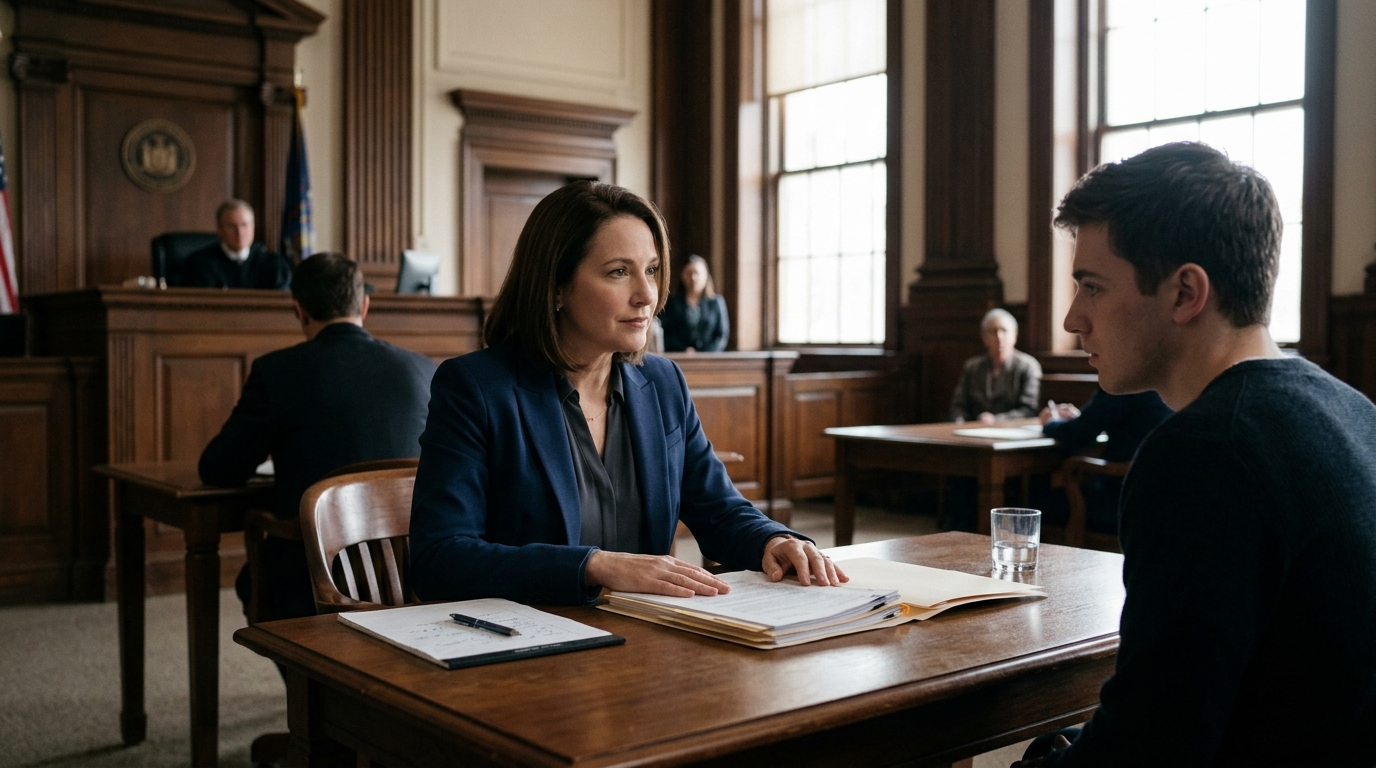
In Rockland County, a probation violation is handled by the original sentencing judge, who presides over the violation hearing and determines the outcome. The District Attorney's Office prosecutes the violation, while the defense attorney represents the probationer. This guide explains the specific roles of the judge, the prosecutor, and the defense in the VOP process.
VOP Hearing Procedures
A probation violation hearing is a distinct legal proceeding that differs significantly from a standard criminal trial. Understanding these procedural differences is critical for anyone facing a VOP charge in Rockland County. The process begins when a probation officer files a report alleging that the probationer has violated the terms of their sentence.
The Standard of Proof
The most significant difference in a VOP hearing is the standard of proof required for the prosecution. In a criminal trial, the state must prove guilt beyond a reasonable doubt. In a probation violation hearing, the standard is a preponderance of the evidence. This means the prosecution only needs to show that it is more likely than not that a violation occurred. This lower threshold makes the defense strategy fundamentally different from that used in a criminal trial.
Evidentiary Rules and Rights
Evidentiary rules in VOP hearings are also more relaxed than in criminal trials. Hearsay evidence is generally admissible in these proceedings. This allows the probation officer to testify about statements made by the probationer or third parties, even if those individuals are not present in court. Furthermore, the defendant does not have the right to a jury trial in a VOP hearing. The judge acts as the sole fact-finder. These procedural realities mean that the defense must be prepared to challenge the credibility and reliability of hearsay evidence effectively.
Types of Violations
Violations generally fall into two categories: technical violations and new offense violations. Technical violations include failing to report to a probation officer, missing a drug test, or violating a curfew. New offense violations occur when the probationer is arrested for a new crime. In cases involving a new offense, the probationer faces two separate proceedings: the criminal case for the new charge and the VOP hearing for the original sentence. Managing both simultaneously requires careful legal coordination.
The Role of the Sentencing Judge
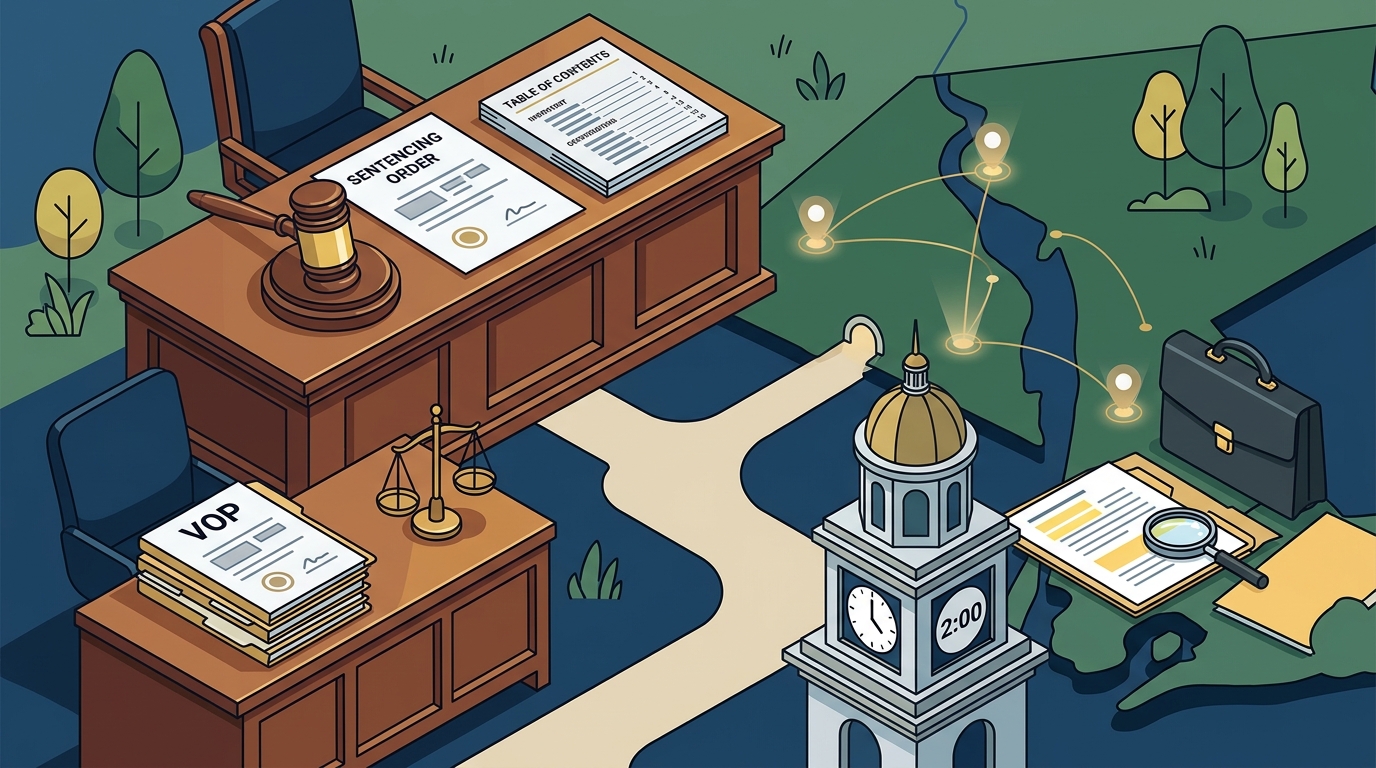
The sentencing judge is the central figure in the VOP process. This is the same judge who originally imposed the probation sentence. Their role is to determine whether a violation occurred and, if so, what the appropriate sanction is. The judge has broad discretion in this process, which makes their understanding of the case facts and the defendant's history crucial.
Determining the Violation
The judge's first task is to find a violation based on the preponderance of the evidence. They will hear testimony from the probation officer, the defendant, and any other witnesses. The judge will also review the probation officer's report and any other documentation. If the judge finds that a violation has occurred, they move to the sentencing phase of the hearing.
Sanctioning Options
If a violation is found, the judge has several options for sanctioning the probationer. They can continue probation with modified conditions, such as increased reporting frequency or additional treatment programs. They can extend the probation period. They can also impose a jail or prison sentence up to the maximum of the original charge. The judge's decision will depend on the nature of the violation, the defendant's history, and any mitigating circumstances presented by the defense.
Mitigating Circumstances
The defense attorney plays a vital role in presenting mitigating circumstances to the sentencing judge. These can include explanations for non-compliance, such as a medical emergency or a misunderstanding of the probation conditions. Demonstrating that the defendant has taken steps to address the underlying issues can influence the judge's decision to impose a lesser sanction. The judge's role is not just punitive; it is also rehabilitative, aiming to ensure public safety while giving the defendant a chance to succeed.
District Attorney Prosecution
In Rockland County, the District Attorney's Office is responsible for prosecuting probation violations. The DA's Office works closely with probation officers to build a case against the probationer. The prosecutor's goal is to prove that a violation occurred and to recommend an appropriate sanction to the judge. Understanding the DA's approach is essential for building an effective defense.
Building the Case
The DA's Office builds its case primarily on the testimony of the probation officer and the documentation in the probation file. This includes incident reports, drug test results, and correspondence with the probationer. The prosecutor will present this evidence to the judge, arguing that it meets the preponderance of the evidence standard. The DA's Office is experienced in these proceedings and knows how to present the evidence in the most compelling way.
Negotiation and Plea Agreements
In many VOP cases, the DA's Office may be open to negotiation. This can involve agreeing to a lesser sanction in exchange for the probationer's admission of the violation. However, the defense attorney must carefully evaluate any offer from the DA. Accepting a plea agreement can have long-term consequences, and it is important to understand the full implications before agreeing to any terms. The DA's willingness to negotiate often depends on the severity of the violation and the defendant's history.
Coordination with New Offense Cases
When a VOP involves a new criminal offense, the DA's Office will handle both cases. This coordination can be complex, as the outcomes of the two cases can influence each other. The defense attorney must manage this interplay carefully, ensuring that the client's interests are protected in both proceedings. The DA's Office will consider the overall picture of the defendant's conduct when making recommendations to the judge.
Key Takeaways
- The sentencing judge is the sole decision-maker in a VOP hearing, with no right to a jury trial.
- The standard of proof in a VOP hearing is a preponderance of the evidence, which is lower than beyond a reasonable doubt.
- Hearsay evidence is generally admissible in VOP hearings, making credibility challenges critical.
- The District Attorney's Office prosecutes VOPs and works closely with probation officers to build the case.
- The judge has broad discretion in sentencing, ranging from modified probation to a full jail or prison sentence.
- Technical violations and new offense violations require different defense strategies.
- Mitigating circumstances can significantly influence the judge's decision on sanctions.
- Effective representation requires an attorney who understands the specific procedures and standards of VOP hearings.
Frequently Asked Questions
Who decides if a probation violation occurred?
The sentencing judge decides if a probation violation occurred. They base their decision on the evidence presented at the hearing, applying the preponderance of the evidence standard.
What is the standard of proof in a VOP hearing?
The standard of proof is a preponderance of the evidence. This means the prosecution must show that it is more likely than not that a violation occurred.
Do I have the right to a jury trial in a VOP hearing?
No, you do not have the right to a jury trial in a VOP hearing. The judge acts as the sole fact-finder.
Can the judge send me to jail for a technical violation?
Yes, the judge can impose a jail or prison sentence up to the maximum of the original charge, even for a technical violation. However, they may also choose to modify probation conditions instead.
Who prosecutes a probation violation in Rockland County?
The District Attorney's Office prosecutes probation violations in Rockland County. They work with probation officers to build the case against the probationer.
What is the difference between a technical violation and a new offense violation?
A technical violation involves failing to comply with probation conditions, such as missing a report. A new offense violation involves being arrested for a new crime while on probation.
Can I negotiate a deal with the DA in a VOP case?
Yes, the DA's Office may be open to negotiation. However, any agreement should be carefully evaluated with the help of an experienced defense attorney.
How can an attorney help in a VOP hearing?
An attorney can challenge the evidence, present mitigating circumstances, and negotiate with the DA. They can also ensure that your rights are protected throughout the process.
Conclusion
Navigating a probation violation in Rockland County requires a clear understanding of the roles played by the sentencing judge and the District Attorney's Office. The judge has significant discretion, and the DA's Office is experienced in building these cases. Having an experienced defense attorney is essential to protect your rights and achieve the best possible outcome. Garbett Law Office provides dedicated representation for probation violation cases in Rockland County. To discuss your case, for a confidential consultation.