

Receiving a notice of license suspension from the New York State Department of Motor Vehicles (DMV) is a stressful event that can disrupt your daily life and career. In Rockland County, many suspensions stem from Driving While Intoxicated (DWI) arrests, but they can also result from point accumulation or failure to appear in court. Understanding the procedural timeline and your legal rights is the first step toward protecting your driving privileges. The Law Office of Yvonne Garbett provides specialized guidance for residents navigating these complex administrative and criminal proceedings.
1. Review the Suspension Notice Immediately
Identify the specific reason and deadline for your suspension. The DMV notice will state the grounds for the suspension, such as a DWI conviction, a refusal to submit to a chemical test, or the accumulation of 11 or more points. It will also specify the effective date of the suspension and the deadline to request a hearing. Missing this deadline can result in an automatic suspension that is much harder to challenge.
2. Determine the Type of Suspension
Understand whether the suspension is administrative or criminal. An administrative suspension is imposed by the DMV, often following a DWI arrest or test refusal, and is separate from the criminal case. A criminal suspension is ordered by a judge as part of a sentence for a conviction. The procedures for fighting each type differ significantly, and knowing which one you are facing is critical for your defense strategy.
3. Request a DMV Hearing Within the Deadline
File a formal request for a hearing to contest the suspension. If you believe the suspension is erroneous, you must request a hearing before the DMV within the timeframe specified in your notice, typically 30 days. This request allows you to present evidence and argue that the suspension should not take effect. Failure to request a hearing in time usually results in the suspension becoming final.
4. Consult with a Criminal Defense Attorney
Engage legal counsel to evaluate the strength of the DMV's case. A qualified attorney can review the police report, the chemical test results, and the procedural history of your arrest. At the Law Office of Yvonne Garbett, we analyze whether the traffic stop was lawful, whether the officer had probable cause, and whether the testing procedures were followed correctly. This evaluation helps determine if a hearing is likely to succeed.
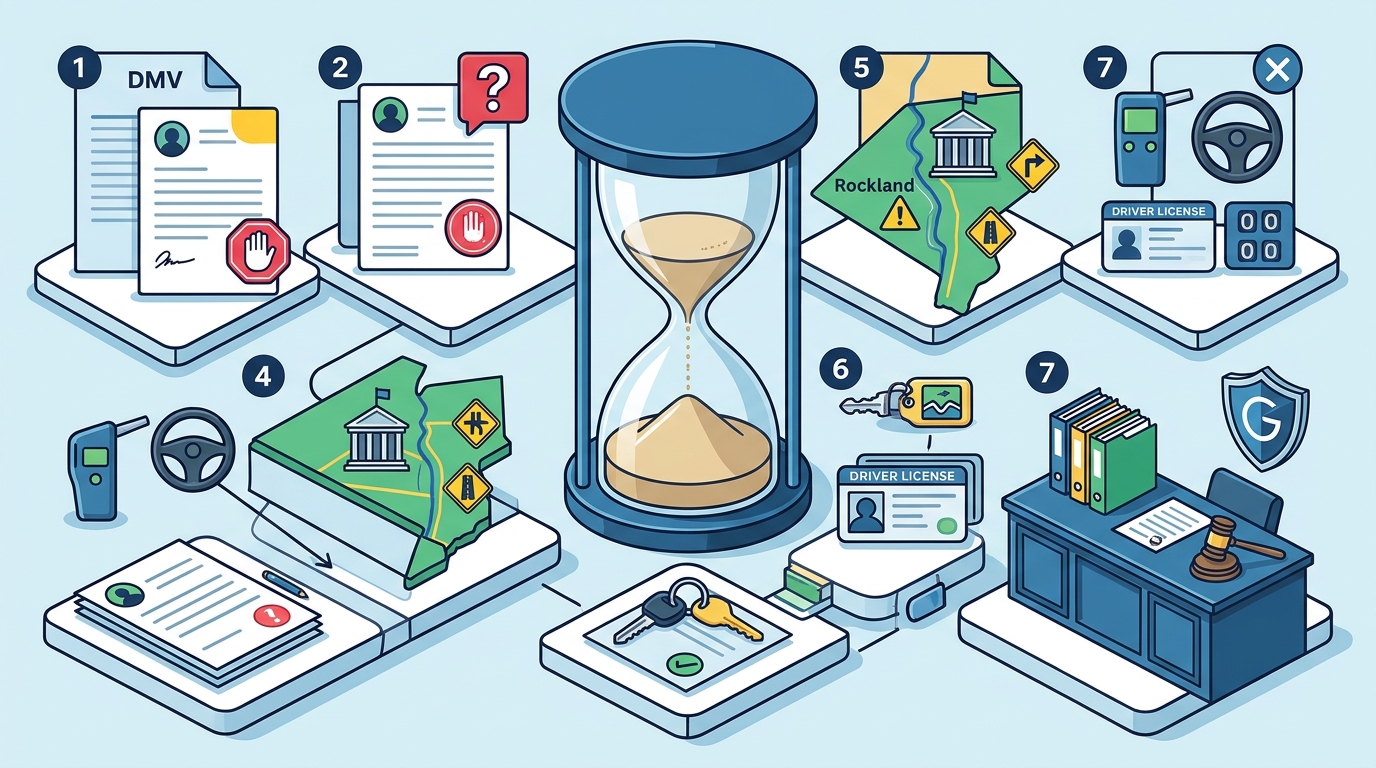
5. Prepare Evidence for the Hearing
Gather documentation that supports your defense. This may include witness statements, medical records explaining why you could not take a test, or evidence that the breathalyzer was not calibrated. Your attorney will help you organize this evidence and prepare for the hearing. In Rockland County, where many DWI cases are handled in local justice courts, having a strong evidentiary record is essential for a successful challenge.
6. Attend the DMV Hearing
Present your case before a DMV hearing officer. At the hearing, you or your attorney will argue that the suspension should be denied or modified. The hearing officer will review the evidence and make a decision. If the suspension is upheld, you may have the option to appeal to the DMV's Office of Hearings and Appeals. Attending the hearing is your primary opportunity to contest the suspension administratively.
7. Explore License Restoration Options
Understand the requirements for reinstating your license after a suspension. If the suspension is upheld, you must wait for the suspension period to end before applying for reinstatement. This may involve paying fees, completing a DWI program, or installing an ignition interlock device. Your attorney can guide you through the reinstatement process to ensure you meet all legal requirements and regain your driving privileges as quickly as possible.
Choosing the right strategy depends on the specific facts of your case and the type of suspension you are facing. A thorough legal review is the best way to protect your rights and minimize the impact on your life.
Frequently Asked Questions
How long does a DMV license suspension last in New York?
The duration of a suspension varies based on the reason. A first-offense DWI suspension typically lasts at least six months, while a refusal to submit to a chemical test can result in a suspension of one year. Point-based suspensions may last from one to three years depending on the number of points accumulated. according to Correct driver s
Can I drive while my license suspension is pending?
Generally, no. Once a suspension is issued, you are not legally allowed to drive. Driving on a suspended license is a separate criminal offense that can lead to further penalties, including jail time and a longer suspension period.
What is the difference between a suspension and a revocation?
A suspension is a temporary withdrawal of your driving privileges, after which you can apply for reinstatement. A revocation is a more severe action where your license is canceled, and you must apply for a new license after the revocation period ends, often involving additional fees and testing.
Can I get a conditional license during a suspension?
In some cases, you may be eligible for a conditional license, such as an ignition interlock license, which allows you to drive only in vehicles equipped with an interlock device. Eligibility depends on the type of suspension and your driving history.
How does the Law Office of Yvonne Garbett help with DMV suspensions?
Our firm provides comprehensive legal representation for clients facing license suspensions in Rockland County. We review the evidence, request hearings, and advocate for your rights to minimize the impact of the suspension on your life and career.
Take Action Now
If you have received a DMV suspension notice in Rockland County, do not wait. Contact the Law Office of Yvonne Garbett today to schedule a confidential consultation and protect your driving privileges. Our team is available 24/7 to assist you with your case.